Don’t forget to refresh your Biathlon Integrity Certificate (BIC)
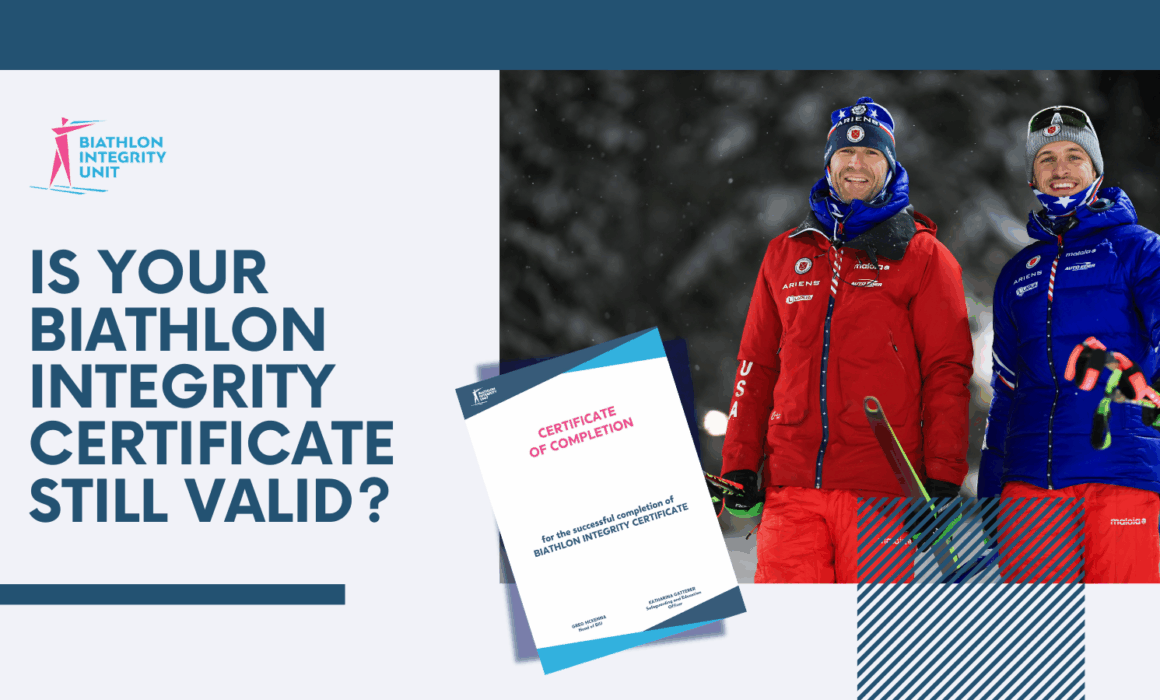
As the winter season approaches, the Biathlon Integrity Unit (BIU) is issuing a reminder to all team staff: it’s time to refresh your Biathlon Integrity Certificate (BIC). The certification, introduced during the 2022–23 season, has become a cornerstone of the sport’s commitment to transparency, athlete protection, and fair competition.
The BIC ensures that everyone working with athletes—coaches, medical personnel, technicians, media representatives, and all other team staff—understands their responsibilities when it comes to upholding integrity in biathlon. By establishing a shared baseline of knowledge, the BIU aims to strengthen the culture around safeguarding, anti-doping, and ethical behaviour across all levels of the sport.
Available in English, Russian, and German, the certificate remains mandatory for participation in any IBU-sanctioned event. Staff members must renew their certification every two years to maintain compliance with evolving rules and integrity standards.
The course is divided into four core modules, each focusing on a vital area of integrity education:
– Your role as Athlete Support Personnel and your influence on athletes’ behaviour and decision-making
– Anti-Doping, ensuring awareness of risks, responsibilities, and prevention
– Safeguarding, promoting safe environments and athlete well-being
– Competition Manipulation, addressing the risks and prevention of match-fixing and related misconduct
Since its launch, the BIU has issued 2,034 certificates and is now encouraging all team staff to check the validity of their current certification and complete the renewal process ahead of the new competition season.
The 2026 Prohibited List: Summary of Changes
The World Anti-Doping Agency (WADA) has recently released the 2026 Prohibited List , which details the substances and methods that are banned within sport. Broken down into several categories, the List identifies which substances and methods are prohibited at all times, in-competition only, and within specific sports.
The below sections summarise the major changes to the List for 2026. Please consult the 2026 Summary of Major Modifications and Explanatory Notes document for the full list of modifications.
Manipulation of blood or blood components
Currently, the administration or reintroduction of blood or red blood cell products of any origin into the circulatory system is prohibited. In 2026, the withdrawal of blood or blood components (even without reintroduction into the circulatory system) will also be prohibited, unless withdrawal occurs for the following reasons:
- Analytical procedures such as medical tests or Doping Control
- Donation purposes performed in an accredited collection centre.
This means that bloodletting procedures (such as, venesection to treat conditions like hemochromatosis) will be prohibited in 2026 and will require an athlete to obtain a TUE to cover the use of such a medical intervention.
Carbon Monoxide
The use of re-breathing systems or equipment to deliver carbon monoxide will be prohibited in 2026, unless performed as a diagnostic procedure under the supervision of a medical or scientific professional. Examples of permitted diagnostic procedures include the use of carbon monoxide to determine an individual’s pulmonary diffusion capacity or when measuring total haemoglobin mass to assess aerobic capacity.
Inhaled Salmeterol
The allowed use of inhaled salmeterol will be modified in 2026. The total permitted daily dose of 200 micrograms over 24 hours remains unchanged. However, athletes will only be able to therapeutically inhale up to 100 micrograms of salmeterol over any 8-hour period (and not to exceed 200 micrograms over 24 hours). A TUE will be required to cover therapeutic use that exceeds these permitted limits.
Gene and Cell Doping
The use of cell components (e.g. nuclei and organelles such as mitochondria and ribosomes) will be added to the existing definition that prohibits the use of normal or genetically modified cells. The inclusion of cell components means that the use of mitochondrial transplantation therapy will also be prohibited in 2026.
Additional examples
Several new examples of prohibited substances have been added to various categories of the List. Please note that these are not new substances being added to the 2026 List for the first time but are additional examples of substances that are already prohibited.
Additional examples of Prohibited Substances
S2. Peptide Hormones, Growth Factors, Related Substances, And Mimetics
Pegmolesatide
S4. Hormone and Metabolic Modulators
2-Phenylbenzo[h]chromen-4-one (ɑ-naphthoflavone; 7,8-benzoflavone)
5-N,6-N-bis(2-fluorophenyl)-[1,2,5]oxadiazolo[3,4-b]pyrazine-5,6-diamine (BAM15)
S6. Stimulants
Flmodafinil (2-[Bis(4-fluorophenyl)methylsulfinyl]acetamide)
Fladrafinil (2-[bis(4-fluorophenyl)methylsulfinyl]-N-hydroxyacetamide)
Athletes and their support personnel should make themselves aware of the changes, review any medications they use, and apply for a Therapeutic Use Exemption (TUE) if required before the updated List comes into effect on 1 January 2026.
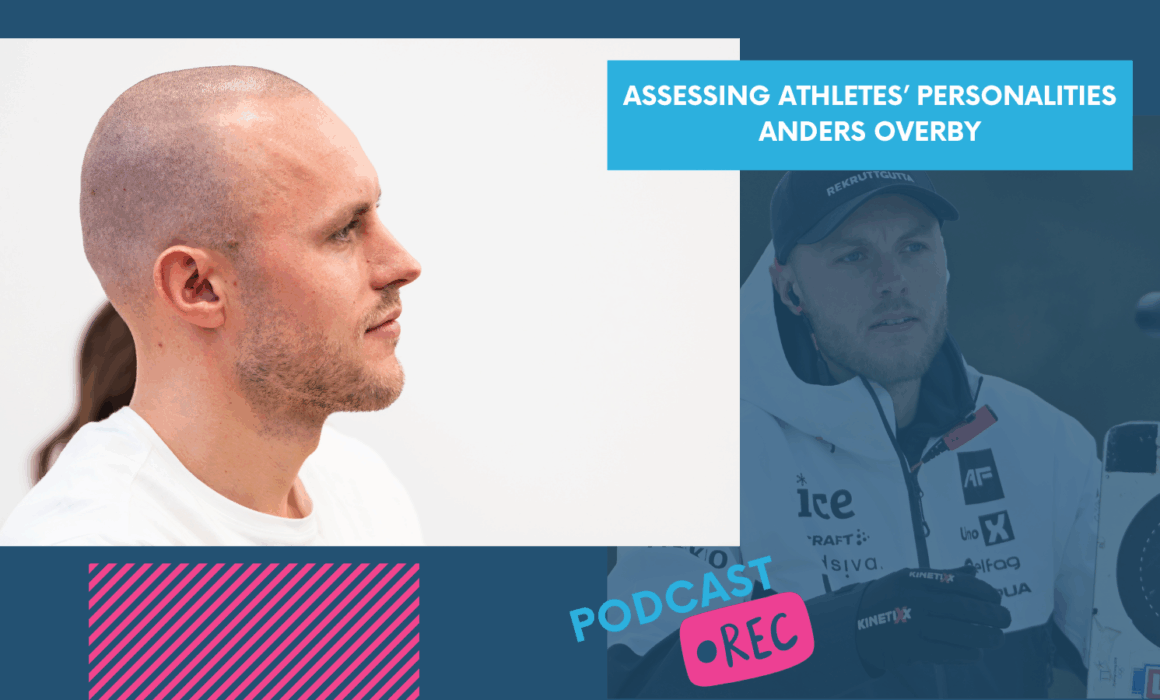
Anders Overby: assessing athletes’ personalities
Anders Overby is a former biathlete from Norway who’s been coaching for 10 years, including in his practice innovative techniques to assess the personalities of the athletes in his care.
As coach of both Norway’s men’s B team and the Norwegian Paralympic team at the Beijing 2022 Paralympic Games, Anders stresses the importance of coaches adopting a values-based approach to leadership.
As part of the BIU’s series of interviews on mental health in the sport, we spoke to Anders about the main threats to athletes’ mental health in the sport, and how using a personality test can help him bring the best out of the athletes in his care.
In the interview, Anders explains that such tests are based on typical MAP (Mental Aptitude Profile) tests used by companies as part of their recruitment process. The tests provide information on how we think and act under certain circumstances.
The tests measure subjects according to what Anders calls the ‘Big Five’ criteria: Openness; Conscientiousness; Extroversion; Agreeableness; and Neuroticism. While Anders no longer asks his athletes to take tests, the principles they have established provide him with a useful tool for reflection and thinking.
To listen to the interview, click here. https://youtu.be/B9K1_NNenyo
Protecting Clean Athletes – Project SAFE VOICE
The Biathlon Integrity Unit (BIU) will move into Phase Two of its Voice Analytics Screening Tool project, a technology-led initiative designed to strengthen the protection of clean athletes and ensure fair competition across the sport.
Field-validated and scientifically backed, Clearspeed’s AI-enabled voice analytics technology assesses risk by analysing the responses to a short set of customised and automated yes/no questions for universal vocal characteristics known to be associated with risk. This delivers a point-in-time, individualised threat assessment for each participant that enables rapid, impartial assessments by the BIU to quickly clear low-risk participants, while focusing its efforts where they are most needed.
Supporting Athletes Through Smarter Integrity Tools
The BIU’s approach puts athlete welfare and fairness at the centre.
By using this tool, clean athletes can be cleared quickly, reducing unnecessary intrusion and building greater confidence in how integrity checks are handled. The process is non-invasive, private, and voluntary, meaning athletes remain in full control of their participation.
BIU Head Greg McKenna said:
“Our aim is to protect clean athletes, not burden them. Technology like this helps us work faster, fairer, and with stronger ethical oversight. It ensures our integrity processes are proportionate and transparent.”
The pilot phase, carried out at during last season’s IBU events, confirmed the technology’s operational value and athlete acceptance when clear communication and ethical safeguards were in place. Feedback from athletes and coaches directly shaped the next stage, improving question design, privacy messaging, and briefing materials.
Clearspeed’s technology is already trusted in sectors where fairness and accuracy are critical, including law enforcement, the military and insurance. Leading insurers improved fraud detection while resolving honest claims more quickly.
That same reliability now supports the BIU’s mission to protect biathlon athletes.
Stronger Oversight and Transparency
All participation remains voluntary and compliant with European data-protection standards. An independent Ethics Reviewer will oversee Phase Two to ensure transparency and fairness.
Phase Two will expand to include IBU events in the 2025/26 season.
By combining proven technology with strong ethical governance, the BIU continues to lead in modern integrity management, ensuring that clean athletes compete on a level playing field and that biathlon remains a sport defined by trust, respect and fairness.
As we evolve in our methods and approach, we thank the Biathlon Family for their continued trust and support!
What is the ABP?
What is the Athlete Biological Passport, or ABP, and how does it work?
In the BIU’s latest video, Chloe Levins, our Integrity Ambassador, explains that the ABP is a tool used in sports to reveal doping indirectly, by tracking the physiological effects of prohibited substances and/or methods.
Instead of trying to find traces of the drug itself in the athlete’s body, the ABP tracks changes in the athlete’s body over time, by monitoring certain biological parameters.
The ABP has become an important anti-doping tool because the effects of some substances and methods can be detected for longer via these biomarkers than the period in which they linger in the body.
The video further illustrates the process by which athletes’ urine and blood samples are used to create a personal profile.
If a panel of up to three independent experts agrees that the only possible explanation for an abnormality in an athlete’s profile is the use of a prohibited substance or method, the athlete can be sanctioned.
Importantly, it’s not necessary for the athlete to have tested positive.
Athletes need not be concerned that giving a sample for the blood passport will affect their performance, because the amount of blood collected is small: the equivalent of about one tablespoon.
Summarising, Chloe says that the ABP is like a biological fingerprint that helps experts spot unusual patterns that suggest cheating – even if a doping substance itself isn’t found.
The APB alone can’t replace traditional doping testing. But it’s one more important way of helping to keep our sport clean!
To view the video, click here.
From collapse to credibility: how biathlon reclaimed its integrity
How and why was the Biathlon Integrity Unit founded, and how has integrity become central to the governance of the sport of biathlon?
In early October, Alex Marshall, a BIU board member, and Julia Cook, the BIU’s Governance Coordinator, gave presentations at Play the Game 2025.
Alex’s presentation, entitled ‘Regaining trust: building an independent integrity unit’, tracked the seven-year integrity journey (and counting) of the International Biathlon Union since the world of biathlon was rocked by a police raid on the IBU’s headquarters in Salzburg in 2018, and the subsequent launch of a criminal investigation into the former IBU president, Anders Besseberg.
Alex’s presentation explained how, under the former leadership of the IBU, power had coalesced in very few hands, while commercial interests and personal advancement had come to be seen as more important than the health and integrity of the sport.
There was no independent thinking or decision-making around integrity decisions, and there was also a lack of trust from the athletes towards the governing body.
Rebuilding trust
In the wake of the crisis, an independent review commission drafted a new constitution for the IBU, which included the creation of the BIU which would operate independently from the overall organisation of the IBU.
But the BIU’s biggest task, Alex explained, was to win back the trust of the sport’s various constituencies. “Think of all the people who had lost confidence in biathlon,” he continued. “The media didn’t trust it, the fans didn’t trust it, and the athletes didn’t trust it. The sponsors, the broadcasters, they’re not trusting it. That’s a lot of people to win back”.
So how did the IBU and the BIU win back that trust? “You don’t win them back with a constitution,” Alex argued. “You win them back with human beings who have the right approach. And we were very lucky, as we were able to recruit in.”
The ethos of the BIU is about independence, independent thinking, and protecting the sport, Alex explained. Consequently, after five years of operations, “the athlete community is talking to the integrity unit, telling them things, engaging with them,” while “the [IBU] board president has been supportive of the new approach throughout, and the relationship between the unit and the board members has matured greatly over five years”.
The result was that the IBU has gained the highest governance score among IOC international federations with under 50 staff
Key takeaways
Alex ended his presentation with the following conclusions:
Crises can catalyse positive changes
· Adversity can drive fundamental reforms and positive transformation within an organization
Independence is crucial for integrity
· An independent body ensures impartial oversight and upholds ethical standards
Prevention is better than reaction
· Proactive measures and robust systems are more effective than reactive responses
Transparency builds trust
· Open communication and clear accountability foster stakeholder confidence
Excellence in governance is achievable
· Commitment and dedication enable organizations to achieve high governance standards.
Alex’s presentation was followed by one by Julia, entitled ‘Creating a sports governance framework: lessons from the Biathlon Integrity Unit’.
Julia said: “Play the Game facilitates so many important conversations around sports integrity and governance and it’s been great to learn more about the latest work and advancements in the field. It’s a pleasure to be a part of the Play the Game conference and share more about the BIU’s vital work with so many interested stakeholders.”
Play the Game 2025 was a four-day conference in Tampere, Finland that aimed to promote democratic values in world sports, with an emphasis on freedom of expression, transparency, and open dialogue.
Play the Game 2025 was the 14th time Play the Game had brought together journalists, researchers, athletes, whistleblowers, and decision-makers in sport from across the world to confront the issues that matter – with openness, respect, and critical thinking.
BIU study: Athlete Health and Safeguarding
The Biathlon Integrity Unit will shortly be contacting athletes to invite them to take part in a groundbreaking study about the mental and physical health of athletes, and their experiences of harassment and abuse.
Every day, athletes are training and competing at the highest level, but there is limited information on the negative experiences that affect them. The study aims to fill this gap in knowledge, with the ultimate goal of further developing the BIU’s safeguarding strategies.
The study takes the form of an anonymised questionnaire, that will take about 15 minutes to complete. All biathletes aged 16 and over are eligible to participate, once they have provided informed consent.
The study is being conducted by researchers from Thomas More University of Applied Sciences in Antwerp, Belgium, in collaboration with the BIU.
Why should you participate?
By participating, you will make a valuable contribution to the safety and wellbeing of athletes in biathlon. You will be able to gain an increased awareness and education on key topics related to your own safety, health and well-being.
At the same time, the BIU will gain more knowledge to develop specific prevention measures that can only be developed and taken into action by having a clear picture about any potential issues or needs.
Therefore, this study is working towards a common goal – for a fair and safe sport.
Participation is voluntary, and you may withdraw at any time, without penalty. The information that you provide will be kept strictly confidential. The data collected will be stored securely and will not be accessible to anyone outside the research team. Your responses will remain anonymous. The BIU and the IBU will not be able to identify anyone who participates.
If you have any questions regarding the study and your participation, contact Katharina Gatterer (BIU Safeguarding Officer, +43 664 1922 456, [email protected]).
Thank you in advance for your support and cooperation!
CALL FOR TENDERS: PROVISION OF MENTAL HEALTH AND WELLBEING SERVICES
The International Biathlon Union (IBU) and the Biathlon Integrity Unit (BIU) invite qualified providers to submit proposals for the design, delivery, and support of integrated mental health and wellbeing services for athletes, staff, volunteers, and officials.
This tender supports the IBU Mental Health and Wellbeing Strategy (2025–2029) and aligns with the IBU Target 2030 Strategy, which prioritises athlete welfare, integrity, and sustainability.
Scope of Services:
• A 24/7 confidential helpline and digital contact channels
• Online advice and resource portal within the IBU digital ecosystem
• Training for National Federations and Organising Committee Mental Health Contacts
• Regular reporting and updates to the IBU Wellbeing Dashboard
Key Details:
• Contract term: 2026–2029 (with possible extension to 2031)
• Submission deadline: 31 October 2025 (23:59 CET)
• Queries deadline: 15 October 2025
• Contact: [email protected]
Proposals will be assessed on alignment with IBU strategies, innovation, experience, multilingual capacity, cost-effectiveness, and impact reporting.
Biathlon Governance Framework to Launch in October 2025
A new Biathlon Governance Framework is to be launched to all National Federations (NFs) by the IBU, in collaboration with the Biathlon Integrity Unit, in October 2025.
The Governance Framework is a set of governance requirements for all NFs that aims to raise governance standards across biathlon. The process will begin with all NFs being asked to complete an initial assessment of their current governance practices with the full support of the BIU and IBU.
The creation of the Framework has been led by a Governance Working Group, with NF and athlete representatives providing expertise and feedback. A pilot exercise involved a small number of NFs completing the Framework and providing feedback on the process.
The 2025 Governance Framework assessment comprises four sections: NF Information; Safeguarding; Dispute Resolution; and Financial Transparency. Responses will be collected via IBU Scope.
Kalle Lähdesmäki, a former President of the Finnish Biathlon Association and a member of the Governance Consultation Working Group, said: “We need to include transparency and good governance in the Federations so that these come into the process. This is the new way of culture.”
Anastasia Merkushyna, a Ukrainian biathlete who is also a member of the Governance Consultation Working Group, added: “This document sets out the regulatory framework for the operation of sports federations, ensures the implementation of recognized best practices, and offers athletes a clear and consistent basis for decision-making in situations of uncertainty.”
All NFs will receive an email at the start of October with further information about how to complete their submission for the Biathlon Governance Framework.
If you have any questions about the BIU’s National Federation governance work, please contact BIU Governance Coordinator Julia Cook at [email protected]