Test post title
Test post content
Test post content
How can athletes ensure that their voices are heard in their sports?
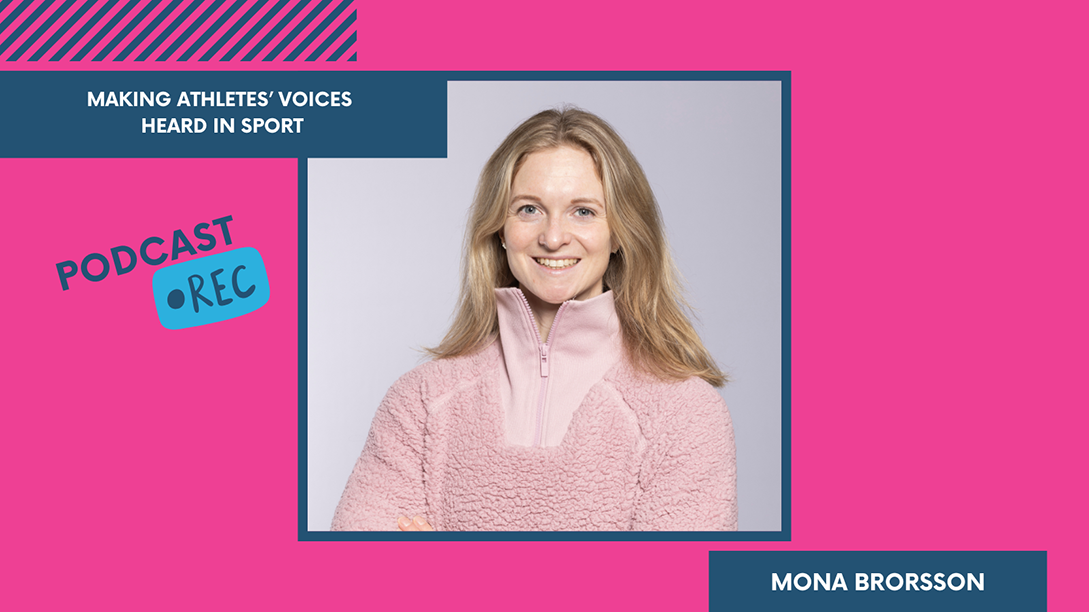
Mona Brorsson is an Olympic gold medallist from Sweden who retired from competing in biathlon in 2024, but is still involved through her roles as an expert commentator for Swedish TV and as a member of the World Anti-Doping Agency’s Athlete Council.
As part of the BIU’s Summer of the Athletes’ Voice we spoke to Mona about her decision to retire to spend more time at home with friends and family, yet to remain involved in biathlon through her growing interest in sports governance.
Joining WADA’s Athlete Council means, she says, that she has a chance to influence the sport she’s been involved in all her life “in a more athlete-friendly way”. She says she understands the views of those athletes who are not interested in the governance of their sports, but only in competing, because she was once one of them.
But, she says, those athletes should at least be interested in who they choose to be their representatives. Sport is complex, with many different stakeholders, so it’s important that the athlete’s voice is not lost among those competing interests.
This summer, Mona is also collaborating with the BIU, supporting the development of athlete education and helping us explore new ways to connect and engage with athletes. Through the lens of her own experience as a former athlete, she brings valuable perspectives, shares lessons learned throughout her career, and helps ensure that athletes’ needs and voices remain at the centre of our work.
To listen to the interview in full, click here.
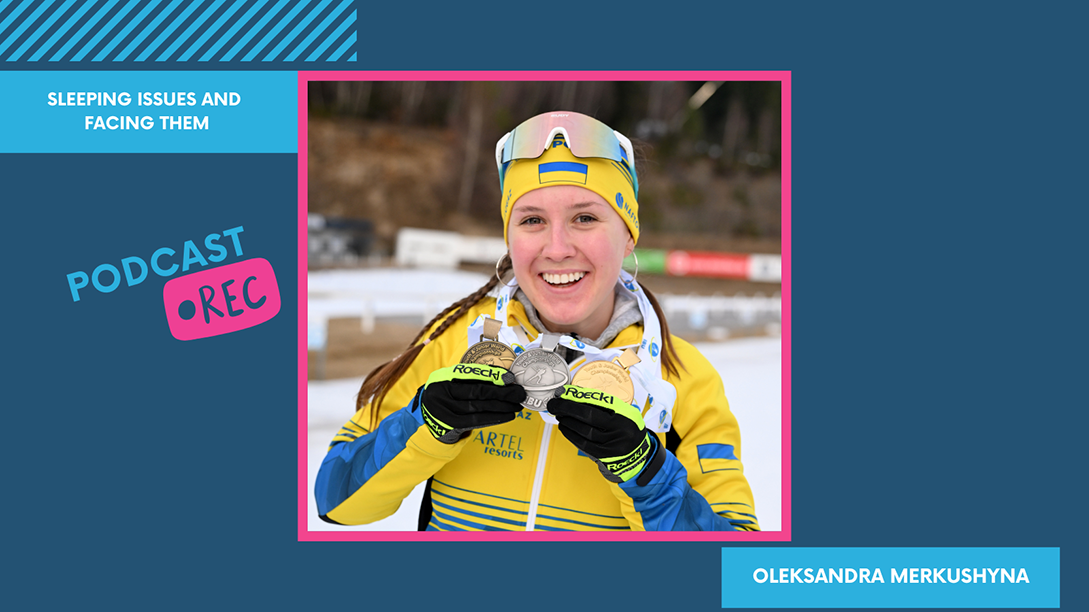
Lots of athletes have trouble sleeping. Oleksandra Merkushyna is a Ukrainian biathlete who overcame her sleep problems. In this, the latest BIU podcast interview we speak to Oleksandra about how her problems started and what she did to address them.
Oleksandra begins by describing how she got into biathlon, and her proudest moment in the sport so far, before going on to explain how sleeping problems began to affect her. While she continued to perform well at junior events (she was 15 when the problem began), she felt emotionally drained, with no energy, and could not properly engage with or enjoy her experiences. Eventually, sleeping became such an issue that she seriously considered quitting the sport.
So how did she address those problems? After one unsuccessful experience with a therapist, she worked with another who had been assigned to the Ukrainian team and who taught her that the key to sleeping well, for her, was to recognise that she feared not the race itself, but not being able to sleep before the race. Through working on this fear, gradually Oleksandra’s sleep improved.
From talking to other athletes, Oleksandra believes that many of them struggle with sleeping issues. So if you’re having trouble sleeping, this one’s for you!
Click here to listen to the full interview.
The Biathlon Integrity Unit (BIU) notes the decision of the Court of Arbitration for Sport (CAS) in International Biathlon Union v Petru Bria.
CAS ruled that Mr Petru Bria, former Secretary General of the Biathlon Federation of the Republic of Moldova, committed serious breaches of IBU Rules and imposed a 10-year period of ineligibility from the date of notification of the award.
The sanction excludes Mr Bria for a decade from participating in any capacity in any competition, programme or other activity authorised or organised by the IBU, any National Federation, or any member or affiliate of a National Federation. He is also prohibited from associating with other participants within the sport during that period.
CAS found that Mr Bria breached the applicable Integrity Code by:
CAS also confirmed that the BIU validly removed Mr Bria provisionally from his position as Secretary General of the Biathlon Federation of the Republic of Moldova. The period already served under provisional suspension will not be credited against the 10-year sanction.
This is a substantial sanction. It reflects the seriousness of the breaches, the responsibilities attached to a senior position of trust, and the need to protect the reputation, safety and integrity of the sport.
The outcome reinforces that all participants, and particularly those in leadership or support roles, must act with honesty and integrity, cooperate fully with BIU investigations, and protect the safety and wellbeing of everyone involved in biathlon, especially children and young adults.
The case also demonstrates the importance of the integrity structures now in place across biathlon. The BIU and IBU continue to strengthen prevention-led governance through the Governance Framework for National Federations, safeguarding and good-governance support, and vetting for persons seeking to hold or remain in positions of responsibility within the IBU structure.
The BIU will continue to work with National Federations and the wider Biathlon Family to identify integrity risks early, strengthen governance and ensure that concerns are addressed effectively and independently.
Anyone with information about a potential integrity concern in biathlon is encouraged to report it through the BIU’s official reporting channels.
Why is it important for athletes to have a voice? What does it take to speak out on behalf of fellow athletes?
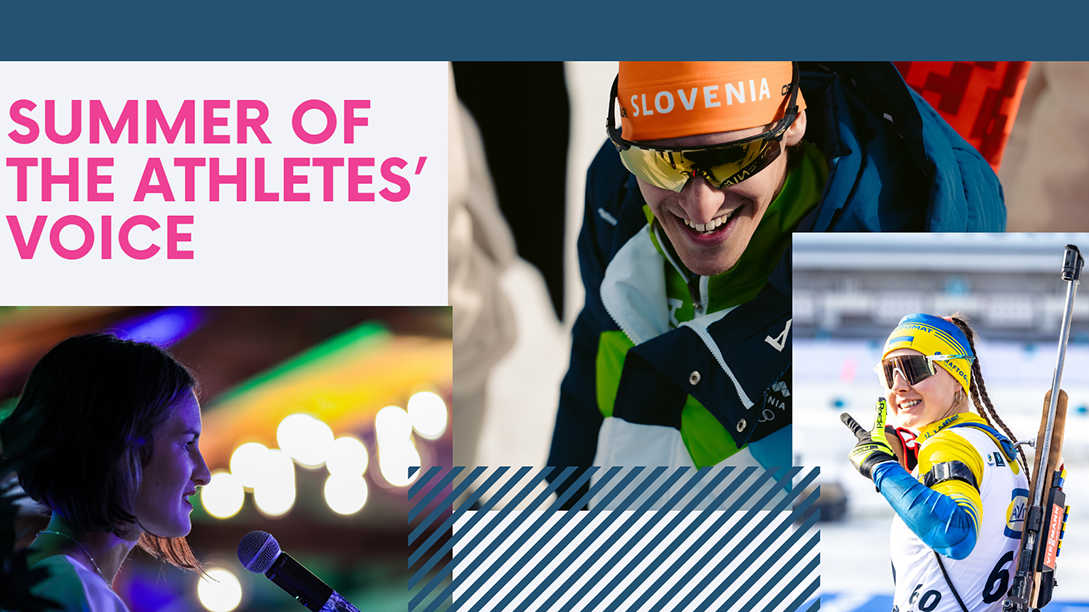
The BIU is today launching its latest campaign, Summer of the Athletes’ Voice, with an exclusive podcast interview with USA’s Clare Egan, a former elite biathlete, who was outspoken about the doping and corruption scandal that afflicted the sport 10 years ago, and has since gone on to work for her country’s State Department.
Pointing to USA’s constitutional guarantee of free speech, Clare says: “Speaking out is in my culture. But it’s also in my nature.” Being elected to the IBU’s Athletes’ Committee with a record number of votes, while still relatively new to biathlon, was a “wake-up call”, making her realise that having a voice in the sport “wasn’t about being the best biathlete.”
She continues: “At first I thought doping was the problem, and then I quickly realised that corruption and inadequate systems for dealing with doping were the real problem.”
Clare goes on to speak about her time on the IBU Executive Board, and how the Biathlon Integrity Unit, launched in 2019, has helped athletes find their voice.
So how should athletes go about speaking out? Organising themselves to act together is key, Clare concludes, saying: “You’re so much stronger together. Speaking out is the second step. Organising is the first step.”
The BIU’s Summer of the Athletes’ Voice campaign aims to encourage athletes to make their voices heard for the good of the sport. It will comprise a series of podcast interviews with athletes and athlete ambassadors, plus blogs, comments and social media posts from athletes, coaches and other experts.
To listen to Clare Egan’s interview in full, click here.
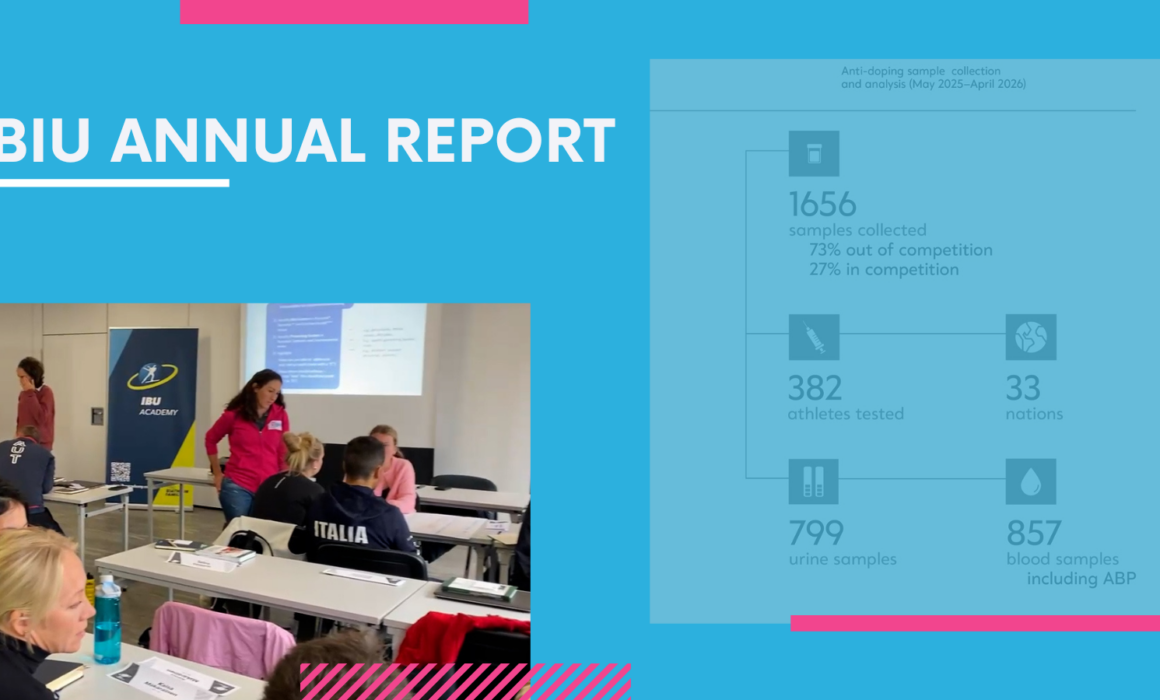
The Biathlon Integrity Unit today published its Annual Report for 2025-26, a year in which the focus was firmly on prevention, and how prevention is put into practice.
As Greg McKenna, Head of the BIU, writes in his introductory message: “This year has been about turning prevention into practical delivery. It means using intelligence properly, testing athletes in a targeted and proportionate way, supporting National Federations to strengthen their governance, educating athletes and support staff before problems arise, and making sure safeguarding and welfare are part of how integrity is delivered in practice.”
The BIU is not just about anti-doping. It’s about integrity in every aspect of the sport of biathlon, and how good governance can help to support it. Greg continues: “One of the most important operational developments this year has been the continued rollout of the Biathlon Governance Framework for National Federations.
“This is prevention in its most practical form. Weak governance creates risk. It can lead to poor decision-making, unclear accountability, unmanaged conflicts of interest, weak safeguarding, poor disciplinary processes and loss of trust. Strong governance helps prevent those issues before they become integrity failures.”
In addition to a financial report and the focus on prevention, the Annual Report also contains an operational insight section, detailing its innovative work on using voice analysis to support clean sport and strengthen the effectiveness of its anti-doping programmes.
Other insights include: analysis of the BIU’s work in supporting the IBU in strengthening athlete wellbeing and safeguarding; and a description of the BIU’s employment of intelligence-led anti-doping testing ahead of the Milano Cortina 2026 Winter Olympic Games.
In her introductory message, Louise Reilly, Chair of the BIU Board, writes: “This has been an important year for the BIU and for biathlon. This year has reaffirmed that integrity is not protected only by responding to issues once they arise. It is protected by building strong systems, supporting good decision-making, educating those closest to the sport, and identifying risks early enough to prevent harm.”
Click here to read the Annual Report.
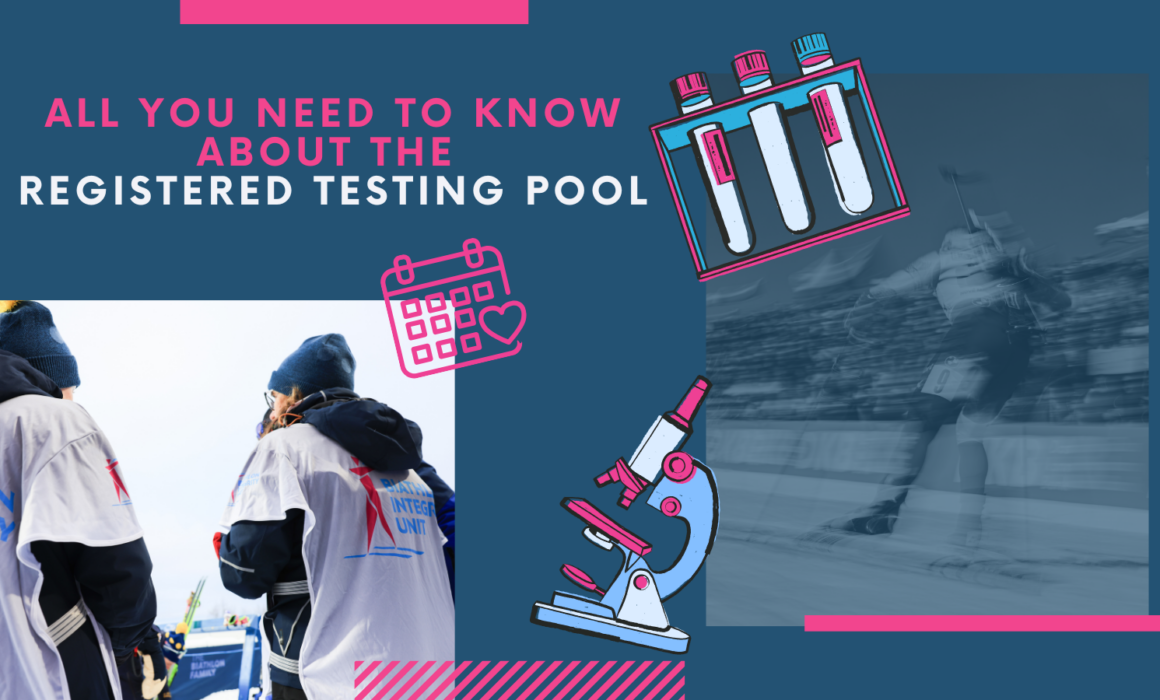
The latest edition of the IBU’s Registered Testing Pool of athletes liable for anti-doping testing will be officially announced on 1 May on the BIU website.
The RTP, which is updated every April, is designed to ensure that top-level athletes are available for testing at any time, reducing their ability to evade controls.
Athletes chosen for the pool must provide a home address, email, phone number and overnight accommodation details, along with training times and locations, competition schedules, and a daily 60-minute slot when they are available for testing. This is known as ‘‘Whereabouts’ information.
Importantly, athletes should be aware that failure to comply with these requirements (for example missing tests or failing to file whereabouts details correctly) can result in an Anti-Doping Rule Violation, often called a ‘Whereabouts Failure’.
So how are athletes chosen for the IBU’s RTP?
Athletes are selected based on criteria in the WADA International Standard for Testing & Investigation, such as ranking, performance changes and funding.
The IBU’s RTP is further selected based on a risk assessment that takes the following elements and risk categories into account:
· Variance in performance (especially in skiing)
· Known risks associated with each athlete’s nation
· Any doping history
· Intelligence
· Data from athletes’ biological passports
All athletes, including those competing in World Cup, IBU Cup, Junior and Para-Biathlon competitions are assessed according to these criteria.
The result is an RTP made up of around 60 male and 60 female athletes.
The BIU exchanges information with National Anti-Doping Agencies to ensure that as many athletes as possible are covered by the IBU’s RTP, as well as those of the NADOs themselves.
Many NADOs also operate a secondary Testing Pool (TP) with less strict reporting for other elite athletes. This is often used for athletes before they join, or immediately after they leave, the top-tier RTP.
Participation in the RTP and the associated Whereabouts process helps ensure that all athletes in our sport are competing on a level playing field.
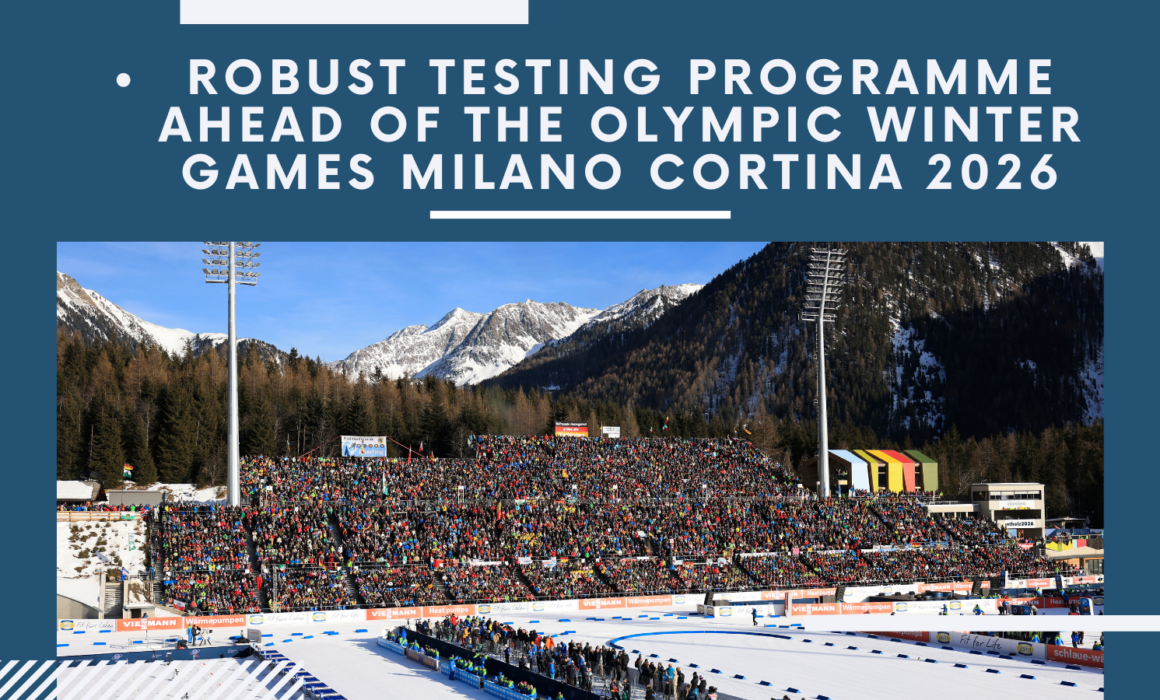
In the lead-up to the Olympic Winter Games Milano Cortina 2026, the Biathlon Integrity Unit (BIU) is continuing with its comprehensive anti-doping testing programme. The intelligence led programme includes both in-competition and out-of-competition testing and is designed to ensure a strong and credible testing framework ahead of the Games.
Intelligence led prevention sits at the heart of the BIU’s integrity work. Alongside testing and investigations, the BIU has invested heavily in education, outreach and engagement across the biathlon community. This includes in-person education sessions, athlete and coach briefings, value-based outreach at events, targeted meetings with teams and the delivery of integrity content, including anti-doping and safeguarding through coach education and certification programmes.
By maintaining a strong and visible focus on prevention, the BIU aims to reduce risk across the sport by improving awareness, understanding and decision-making among athletes and support personnel. This preventative approach is a core part of the BIU’s wider integrity strategy and complements its intelligence-led testing and enforcement activities.
In the months preceding the Olympics, close coordination between the BIU and National Anti-Doping Organisations (NADOs) ensures that all athletes with the potential to qualify for the Games are appropriately covered by testing programmes, avoiding gaps and unnecessary duplication of efforts. This coordination involves regular information sharing on athlete performance trends, selection pathways, competition results and relevant intelligence indicators.
Testing responsibility is determined jointly by the BIU and NADOs using a multi-factor risk assessment. This assessment considers various components, such as, competition level, performance trends, qualification pathways, intelligence indicators and seasonal progression. Through ongoing coordination and agreement, responsibility for individual athletes is reviewed and adjusted as required. This ensures that all athletes with the potential to qualify for the Olympic Winter Games, including emerging athletes and those on qualification margins, are appropriately covered within testing programmes, providing comprehensive and coordinated athlete coverage.
The BIU collected 1332 samples during the summer and autumn training period, as well as throughout the competition season, which began in November. Of these samples, 80% have been collected Out-of-Competition and 20% In-Competition. These figures reflect samples collected directly by the BIU and sit alongside additional testing carried out by National Anti-Doping Organisations as part of the coordinated testing framework.
Since its inception, every sample collected by the BIU has been placed into long-term storage. This allows reanalysis as detection methods improve, acting as a strong deterrent and enabling the identification and sanctioning of athletes who may initially evade detection.
To demonstrate the breadth of monitoring, all athletes currently ranked in the top 30 of the overall World Cup standings have been tested at least three times during the period from 1 May 2025 to 30 January 2026 in Out-of-Competition tests. Further to that, the BIU ensures all athletes competing in World Cup events are generally tested at some point during a season, either In-Competition or Out-of-Competition.
In addition to sample collection, the BIU continues to deploy complementary detection and monitoring measures at events. This includes the targeted use of trained drug detection dogs, in line with established BIU procedures, to support inspections and deter the possession or movement of prohibited substances.
As part of ongoing improvements to its anti-doping and integrity work, the BIU has moved into Phase Two of its Safe Voice analytics project, a technology-led screening tool designed to protect clean athletes and support fair competition.
To date, more than 80 international level athletes have been screened as part of the pilot phase. The field-validated technology analyses responses to a short set of automated yes or no questions to deliver a point-in-time, individualised risk assessment, enabling the BIU to rapidly clear low-risk participants and, in time, will further assist the BIU focus resources where they are most needed.
During the Olympic Winter Games, responsibility for testing lies with the International Olympic Committee, through a programme operated by the International Testing Agency (ITA). In preparation, the BIU has worked closely with the ITA over recent months to support the Games-time testing programme and to align pre-Games testing strategies.
Alongside anti-doping, the BIU continues to integrate safeguarding considerations into its wider integrity monitoring. Intelligence gathered through anti-doping activities, event presence and international cooperation can also assist in identifying safeguarding risks, ensuring that athlete welfare and protection remain central to the BIU’s work in the build up to the Games.
The Biathlon Integrity Unit (BIU) has received confirmation from the Italian NADO of an anti-doping rule violation (ADRV) of Italian biathlete Rebecca Passler. Nado Italia has provisionally suspended the athlete.
The BIU coordinates closely with Nado Italia and all Nados of IBU’s National Federations to ensure the implementation of robust anti-doping programmes at a national level. The ADRV was recorded in a test carried out by Nado Italia who are therefore responsible for managing the case. Please direct any media requests to Nado Italia.
Biathlon Integrity Unit
Email: [email protected]
Website: www.biathlonintegrity.com
Greg McKenna | Head of Biathlon Integrity Unit | [email protected]
+43 662 85 50 50 12
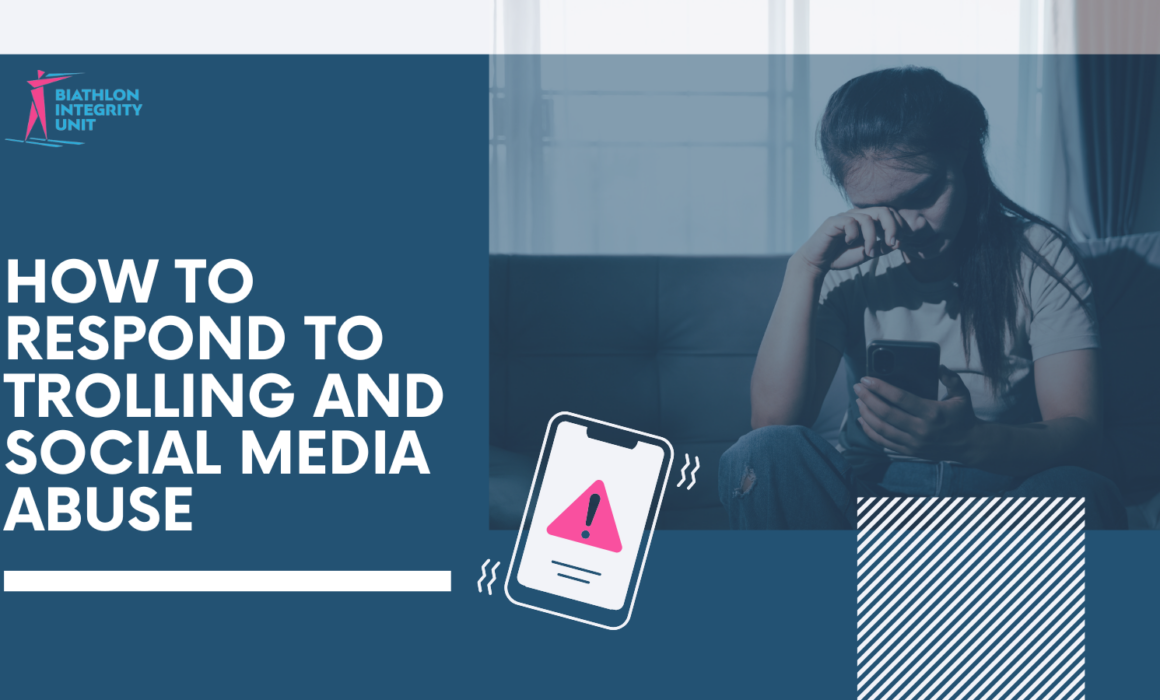
Online abuse or bullying, sometimes called ‘trolling’, is a rising problem for all users of social media. However, the BIU takes the threat of social media especially seriously because sports people are more at risk than other users.
Elite athletes face an increased risk of criticism or abuse because:
· They have a heightened public profile
· Withdrawing from social media is often not an option for them (they are under pressure to be seen to be active on social platforms, whether to satisfy sponsors’ demands or for other promotional purposes).
Safeguards are beginning to be implemented around the world in a bid to protect those most vulnerable, such as children, from the harmful effects of social media abuse.
In the field of sport, the International Olympic Committee has implemented a service during Olympic Games which is designed to detect and respond to abuse against athletes. Harmful posts are flagged immediately, sometimes before the athlete has even seen them.
The IOC has also launched a Mindful Social Media e-learning programme for Olympic athletes, offering a range of strategies and techniques that encourage mindful use of social media.
So how should athletes respond if they are the targets of social media abuse?
Take a deep breath and stay calm
Don’t respond to abuse in the heat of the moment. Be sure to have all of the facts clear in your head before deciding whether to refute the abuse. If you do, make sure to stick to those facts. Don’t get drawn into trading abuse. Remain positive, polite and professional in your reply.
Report the abuse and/or seek help
Social media companies are obliged to keep their users safe. Social media abuse can be reported directly to the company via the app or social media site concerned. If the abuse concerns child sexual abuse or imagery, it can be reported directly and anonymously via the Internet Watch Foundation’s Reporting Portal.
Take screenshots of the abuse to use as evidence in case of a later investigation. If you, or your family or friends are in immediate danger as a result of the abuse, contact the emergency services in your country.
Check your settings/disable direct messaging
Social media channels allow you to block accounts and also to block words or phrases that you deem inappropriate. This is a proactive way of reducing abusive messages. You can also set your accounts to allow only those that follow you to comment.
You can:
· Block abusive accounts
· Adjust your profile settings to control who can see your profile, send you messages or comment on your posts
· Filter inappropriate words and language, hashtags and emojis
· Delete posts on your profile or hide them from specific people.
Following these tips will help you manage your social media accounts proactively, in a healthy, sustainable and mature way.
However, if the abuse persists, you can also report it to the BIU, using our confidential helpline.