BIU publishes Annual Report 2025-26
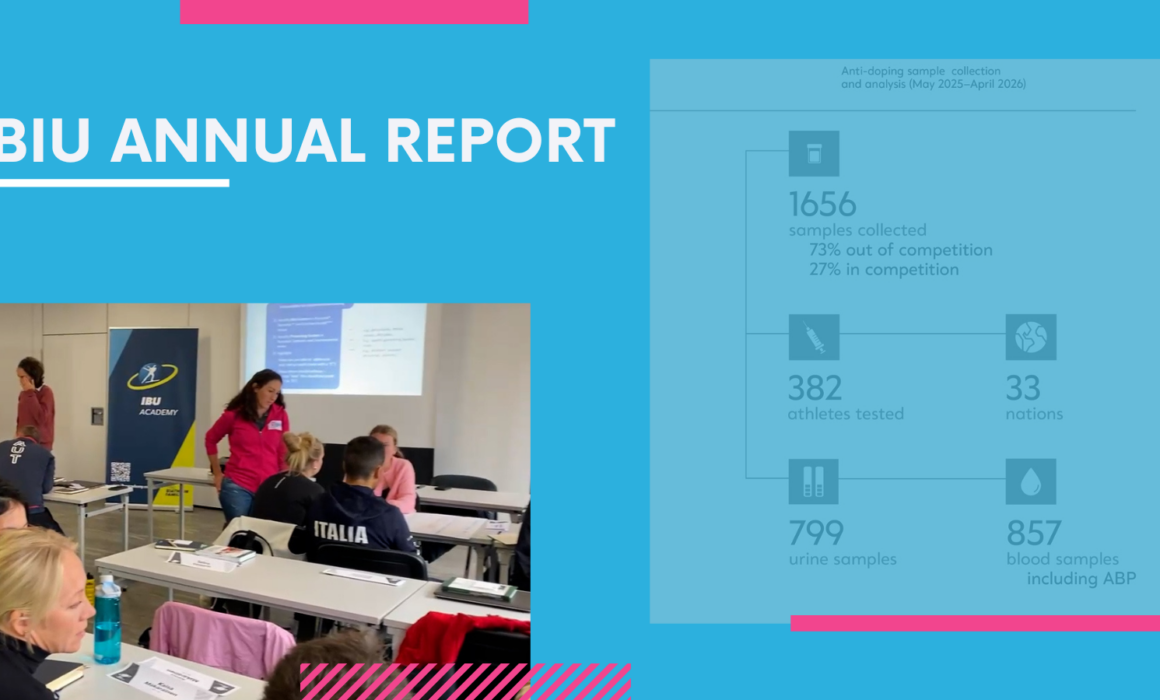
The Biathlon Integrity Unit today published its Annual Report for 2025-26, a year in which the focus was firmly on prevention, and how prevention is put into practice.
As Greg McKenna, Head of the BIU, writes in his introductory message: “This year has been about turning prevention into practical delivery. It means using intelligence properly, testing athletes in a targeted and proportionate way, supporting National Federations to strengthen their governance, educating athletes and support staff before problems arise, and making sure safeguarding and welfare are part of how integrity is delivered in practice.”
The BIU is not just about anti-doping. It’s about integrity in every aspect of the sport of biathlon, and how good governance can help to support it. Greg continues: “One of the most important operational developments this year has been the continued rollout of the Biathlon Governance Framework for National Federations.
“This is prevention in its most practical form. Weak governance creates risk. It can lead to poor decision-making, unclear accountability, unmanaged conflicts of interest, weak safeguarding, poor disciplinary processes and loss of trust. Strong governance helps prevent those issues before they become integrity failures.”
In addition to a financial report and the focus on prevention, the Annual Report also contains an operational insight section, detailing its innovative work on using voice analysis to support clean sport and strengthen the effectiveness of its anti-doping programmes.
Other insights include: analysis of the BIU’s work in supporting the IBU in strengthening athlete wellbeing and safeguarding; and a description of the BIU’s employment of intelligence-led anti-doping testing ahead of the Milano Cortina 2026 Winter Olympic Games.
In her introductory message, Louise Reilly, Chair of the BIU Board, writes: “This has been an important year for the BIU and for biathlon. This year has reaffirmed that integrity is not protected only by responding to issues once they arise. It is protected by building strong systems, supporting good decision-making, educating those closest to the sport, and identifying risks early enough to prevent harm.”
Click here to read the Annual Report.